Design Documentation
0 min
Assembly Time
0 mph
Max Speed
0 lbs
Drone Weight
0 mi
Flight Range
Our Latest Drone
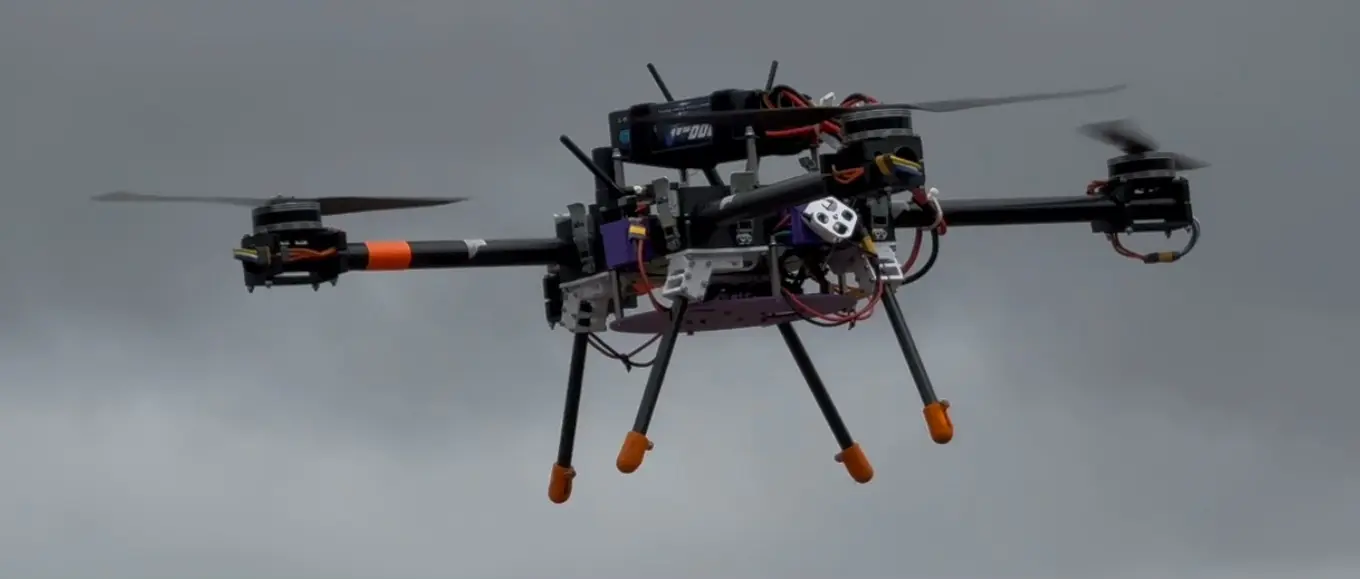
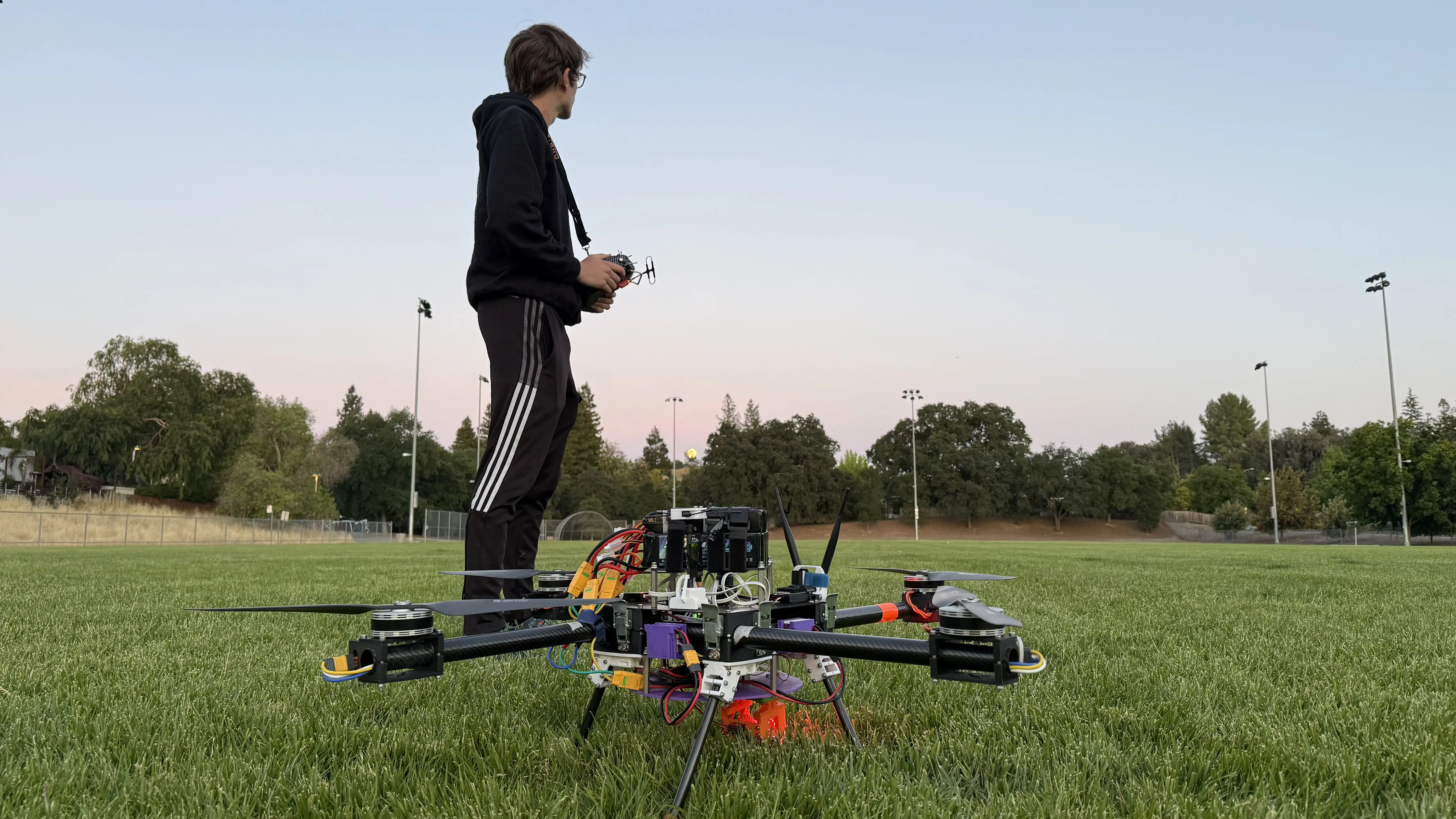
Zephyrus is an autonomous drone Amador UAVs built for the SUAS competition. It is designed for stability, efficiency, and modularity, it integrates advanced software, electrical, and mechanical systems for peak performance. Featuring PX4 autopilot, GPS waypoints, precise object detection, and an innovative payload drop system, Zephyrus is powered by a 2S2P battery and MN 601-S motors for reliable thrust and endurance. Its carbon fiber and TPU construction ensures durability and portability. Optimized through simulation and testing, Zephyrus delivers high autonomy, minimal operator intervention, and exceptional reliability in dynamic conditions.
Software Systems
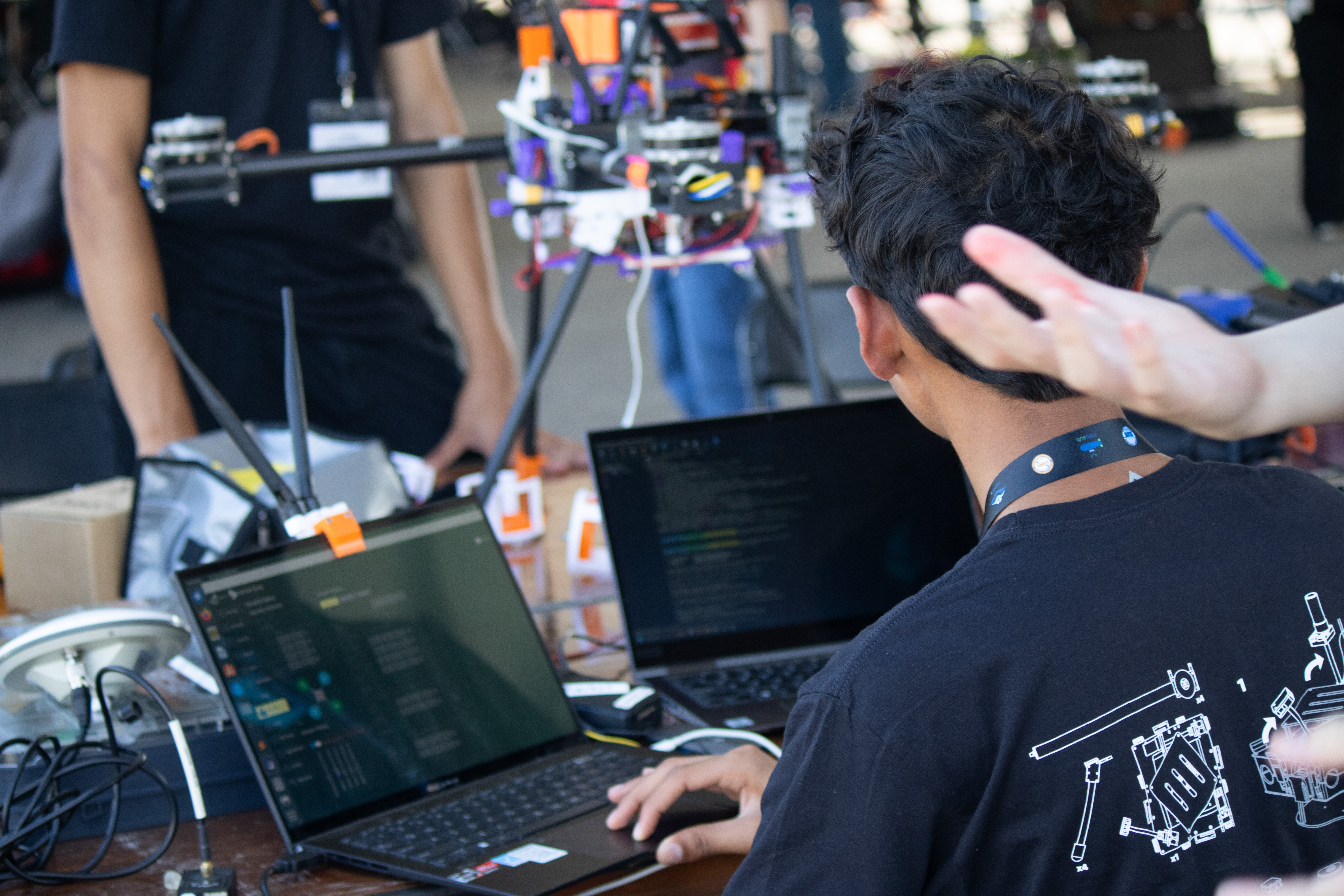
Zephyrus’s software stack is designed for full autonomy with minimal operator input during SUAS missions. The system integrates PX4 autopilot firmware with QGroundControl (QGC) for real-time mission planning and telemetry visualization. A Jetson Nano acts as the onboard companion computer, executing Python-based object detection and navigation scripts. The Jetson processes video input independently, performing onboard inference to reduce latency and offload processing from the flight controller.
Autonomous flight is achieved through a combination of GPS waypoint navigation, onboard localization, and PID control handled by PX4. Object tracking and payload targeting are fully managed on the Jetson Nano, which ensures the aircraft can identify targets and trigger a payload drop without external intervention.
The payload drop software interprets object detection outputs to determine the optimal release moment. The Jetson then sends a command through MAVLink to the Pixhawk, which relays it to a microcontroller that actuates a servo. This indirect control path helps avoid overloading the flight controller with peripheral operations.
All systems were rigorously tested in simulation using Gazebo integrated with PX4 SITL and QGC, enabling validation of complex autonomous behaviors like return-to-home, object engagement, and precise payload delivery before live flights began.
Mechanical Systems
Zephyrus’s mechanical design centers on modularity, structural integrity, and rapid field deployment, while meeting size constraints for carry-on transportation. The airframe is built primarily from carbon fiber, with TPU inserts and mounts used for shock absorption and flexibility. A central carbon hub houses core electronics, with radial arms providing lateral stiffness. The top-mounted battery plate offers easy access, and embedded electronics are shielded by the carbon shell.
Latching clamps secure the arms with high holding force, and clip-in legs allow for fast assembly and teardown. All major mechanical parts use standardized, interchangeable connectors, which improves serviceability and supports modular payload configurations.
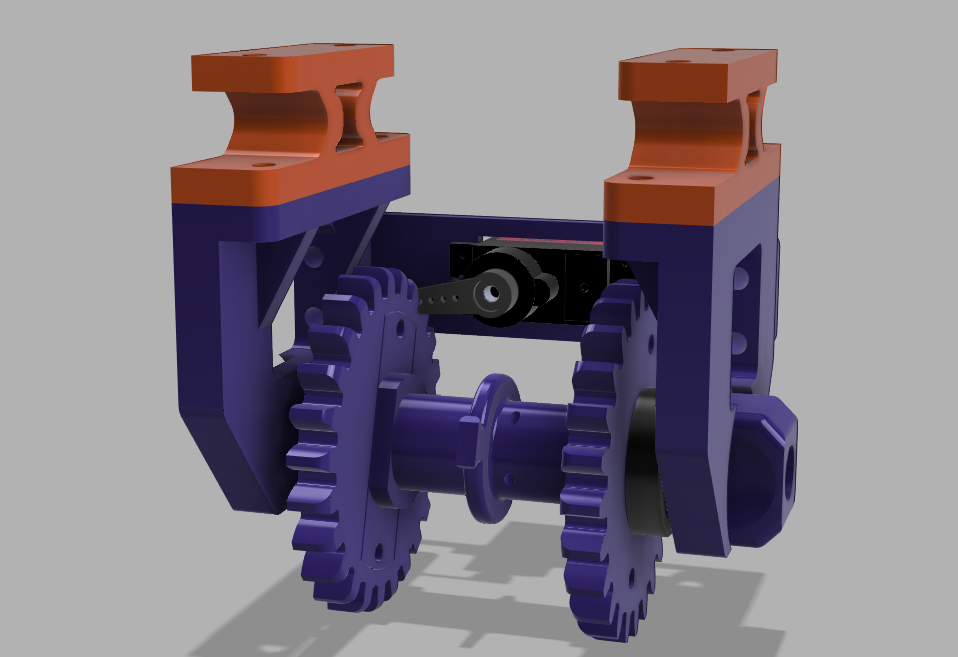
The payload drop mechanism is a spool-based system that gradually decelerates the payload through controlled unwinding, reducing impact velocity. MG90s servos operate a latch-based release mechanism, and TPU dampers isolate vibrations between the aux plate and the payload shaft to minimize stress on the airframe.
A two-axis brushless gimbal, printed in PA6 CF-20 filament for strength and heat stability, is gyro-stabilized to maintain a downward orientation during flight. It is integrated with Jetson software to respond dynamically to object tracking, ensuring alignment during payload targeting.
The design was validated using FEA (Finite Element Analysis) simulations in Onshape, which tested the frame’s response to landing impact and payload-induced torque. Additionally, iterative physical testing of the latch clamps and leg clips ensured mechanical durability and ease of field use.
Electrical Systems
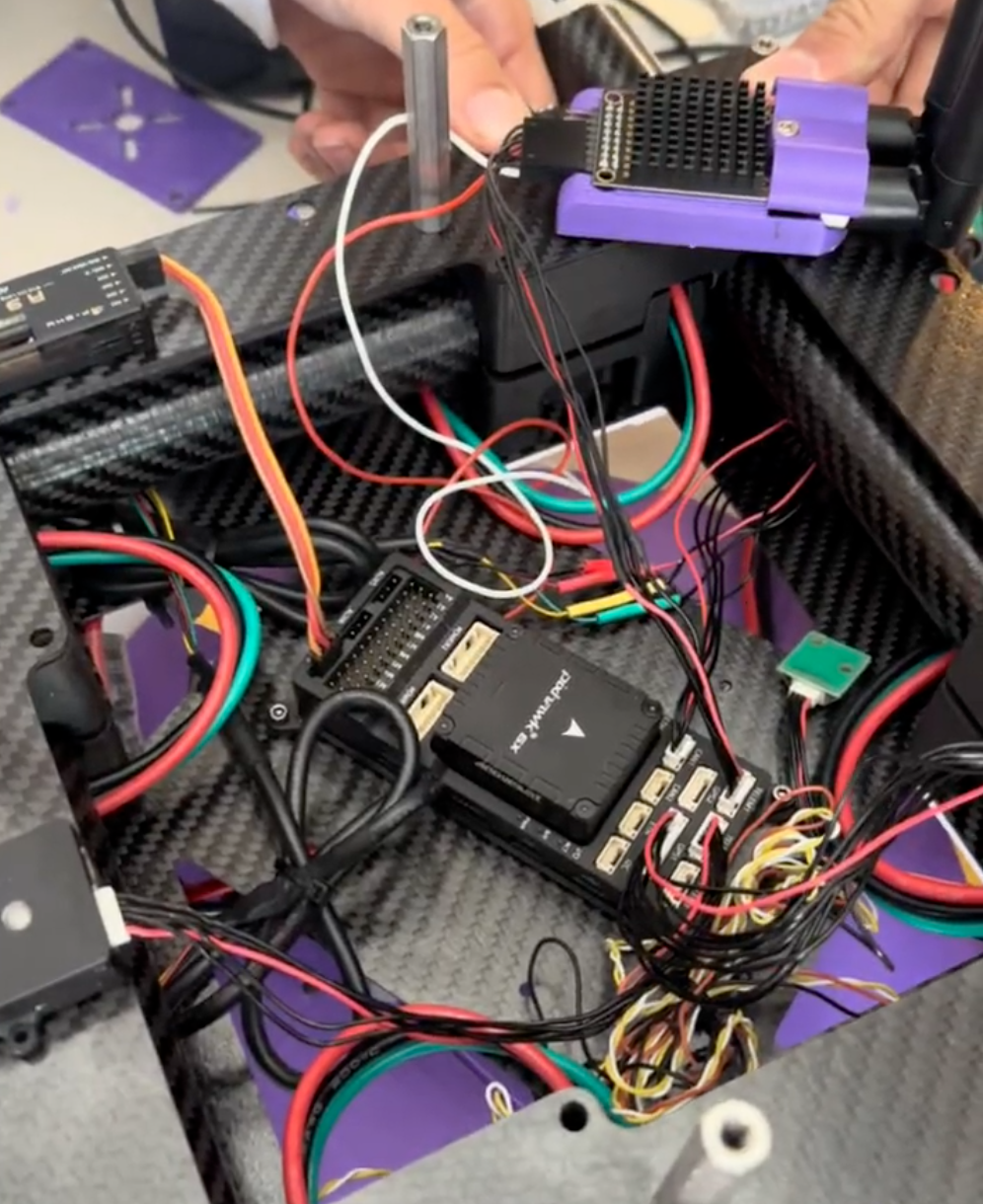
The electrical architecture emphasizes modularity and efficiency, with a focus on safe power distribution and clean signal communication. Zephyrus uses a 2S2P 3S LiPo battery configuration (22.2V, 18,000 mAh), balancing weight and capacity for extended missions with two payload drops. Batteries are placed to align with the drone’s center of mass and can be quickly swapped in the field. A custom voltage regulation board ensures reliable delivery of 5V and 12V to sensitive systems like the Jetson Nano and telemetry modules, protecting against power dips or spikes.
The propulsion system features MN 601-S brushless DC motors matched with Zubax Myxa ESCs, which use CAN Bus communication for precise, low-noise control. These ESCs enable detailed telemetry and fast response times while reducing electromagnetic interference. Ecalc simulation tools were used to model and optimize motor performance under various payload and airframe configurations, verifying thrust and flight time.
For avionics, Zephyrus employs a Pixhawk 6x flight controller with RFD900 long-range telemetry and a dual GPS setup to ensure navigational redundancy. All high-current components are electrically isolated from low-noise modules to protect against fluctuation. Avionics are mounted on vibration-dampened platforms with organized wiring, allowing for quick diagnostics and component replacement when needed.

Drone Testing
To prepare Zephyrus for the mission tasks at the SUAS competition, we prioritize flight testing to ensure the drone proves reliable. We test flight stability, autonomous flight plans and individual mechanical parts to assess the overall performance of the drone under conditions similar to the competition. Our thorough testing allows us to find possible issues early on and brainstorm designs to mitigate them in the future for efficiency during the mission.
After every flight, we review the PX4 logs from the drone to check for any abormalities and improve efficency.
Component Specifications
| Subsystem | Component | Specification / Details |
|---|---|---|
| Power System | Battery | 2S2P (6S LiPo), 22.2V, 18,000 mAh |
| Power Distribution | Custom voltage regulator board with 5V and 15V outputs | |
| Motors & Propulsion | Motors | MN 601-S, Brushless DC motors |
| ESCs | Myxa ESCs with CAN Bus communication | |
| ESC Tuning | Ecalc simulations for flight time and thrust efficiency | |
| Flight Control & Communication | Flight Controller | Pixhawk 4 |
| Telemetry | RFD900, long-range radio telemetry | |
| GPS | Dual GPS setup for redundancy | |
| Communication | MAVLink and serial protocols | |
| Onboard Computer | Jetson Orin Nx | Runs Python scripts for autonomous control, object detection, and navigation |
| Payload Mechanism | Servo | MG90s micro servo for payload release |
| Payload Control | Spool-based system with directional winding; TPU dampers for vibration isolation | |
| Gimbal System | Type & Material | 2-axis brushless gimbal; PA6 CF-20 filament for strength and thermal stability |
| Stabilization | Gyro-based real-time alignment with object detection algorithms | |
| Structural Integrity | Frame Material | Carbon fiber frame with TPU shock absorption |
| Design | Modular, vibration-isolated avionics platform for easy replacement | |
| Testing | FEA simulations (Onshape) for load and torque validation |
AmadorUAVs Group
© 2018 - 2025 | EIN 99-4292368